
The secrets of the bands with the lowest mortality rate
Mortality rate is one of the most critical indicators of success for any broiler house. Even a minor difference of just one percent in mortality can significantly impact profitability by the end of the production cycle.

An examination of exceptionally high-performing broiler houses reveals that there is no single "magic secret." Success stems from a combination of professional management, attention to detail, continuous monitoring, and a rapid response to any deviation.
A Strong Start from Day One
A chick's first few days of life are the most critical.
Flocks with low mortality rates typically benefit from:
* Rapid chick placement and settling.
* Uniform temperature within the poultry house.
* Immediate access to water and feed.
* Even distribution of chicks throughout the facility.

Successful growers invest significant time during these initial days to ensure every chick gets the best possible start in life.
Uncompromising Water Quality
Water is the most important nutrient in the poultry house.
Top-performing operations prioritize:
* Cleaning water lines.
* Preventing biofilm buildup.
* Periodic water quality testing.
* Water pressure appropriate for the birds' age.
Water-related issues are among the most common causes of increased morbidity and mortality.
Precise ventilation throughout the cycle
Poultry have a highly sensitive respiratory system.
High-quality ventilation helps to:
* Reduce ammonia levels.
* Remove excess moisture.
* Improve air quality.
* Prevent respiratory diseases.
Flocks with low mortality rates almost always benefit from rigorous ventilation management.
Maintaining dry litter
Wet litter creates a breeding ground for bacteria and parasites.
Benefits of dry litter:
* Reduced incidence of intestinal diseases.
* Fewer leg problems.
* Better air quality.
* Lower bacterial load.
Leading growers check the condition of the litter daily.
Daily flock data monitoring
Success is not based on gut feeling alone.
Top-performing poultry houses track:
* Water consumption.
* Feed consumption.
* Average weight.
* Daily mortality.
* Temperature and humidity.
Any deviation is investigated immediately before it escalates into a significant problem.
Early disease detection
Many diseases begin with subtle signs.
Experienced growers look out for:
* A slight drop in water consumption.
* Changes in behavior.
* Abnormal clustering.
* Changes in droppings.
A rapid response can prevent a widespread outbreak within the flock.
Stress Reduction
Stress compromises the immune system and increases mortality risk.
Common stressors:
* Loud noises.
* Heat stress.
* High stocking density.
* Sudden environmental changes.
Calm and consistent management helps maintain a healthy flock.
High-Level Biosecurity
Flocks with low mortality rates adhere to strict protocols:
* Equipment disinfection.
* Pest control.
* Restricted visitor access.
* Changing clothes and footwear.
* Thorough cleaning between cycles.
Preventing disease entry is more effective and cost-efficient than any treatment.
Investing in Gut Health
Gut health directly impacts flock health.
Common tools:
* Probiotics.
* Prebiotics.
* Organic acids.
* Proper feed management.
Poultry with a healthy digestive system cope better with the challenges of rearing.
A Professional and Alert Team
Even the most advanced technology cannot replace professional staff.
In successful poultry houses:
* The team undergoes training.
* Daily inspections are conducted.
* Any anomaly is reported promptly.
* Decisions are made based on data.
The human factor remains one of the most important keys to success.
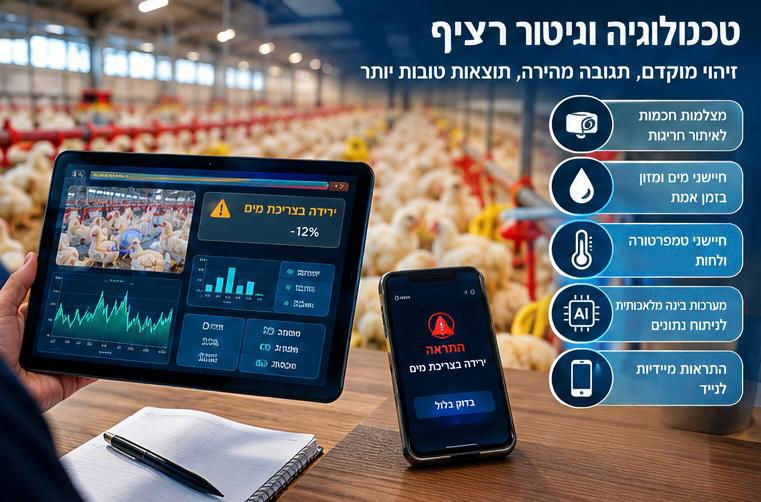
Use of Advanced Technologies
An increasing number of poultry houses now incorporate:
* Smart cameras.
* Water sensors.
* Feed sensors.
* Artificial intelligence systems.
* Remote monitoring via mobile phone.
These technologies enable the early detection of issues and a rapid response.

Summary
Flocks with the lowest mortality rates do not benefit from mere luck, but rather from precise and consistent management. A combination of proper chick placement, high-quality water, optimal ventilation, biosecurity, daily monitoring, and early problem detection creates conditions that allow the birds to reach their full potential.
Ultimately, the difference between an average flock and an outstanding one usually lies in the details and the ability to respond quickly to any change.
*It is always advisable to consult a qualified veterinarian.


