
Foot disorders in chickens and chicks
- Feb 25
- 2 min read
Foot disorders in chickens and chicks are quite common, especially in intensive rearing conditions. They can result from infections, improper nutrition, environmental conditions, or injuries. Here is an explanation organized by main types:
1. Pressure Ulcers (Pododermatitis / Bumblefoot)

• What is it: Inflammation and infection of the foot, usually with swelling, fever and sometimes pus.
• Causes:
• Wet/dirty bedding
• High weight (especially in the teats)
• Immobility
• Signs:
• Lameness
• Black sore/crust on the foot
• Prevention:
• Keeping the bedding dry and clean
• Good ventilation
2. Curled Toe / Crooked Toes

• What is it: Bent or crooked toes, especially in young chicks.
• Causes:
• Vitamin deficiency (especially riboflavin – B2)
• Incubation problems
• Signs:
• Unsteady gait
• Difficulty standing
• Prevention:
• Balanced diet
• Proper incubation conditions
3. Splay Leg

• What is it: Legs that open to the sides – the chick is unable to stand.
• Causes:
• Smooth surface (no grip)
• Developmental imbalance
• Signs:
• Inability to stand
• Treatment:
• Temporary immobilization of the legs (like a “bridge”)
• Improving the surface (sawdust/mat)
4. Arthritis / Tenosynovitis
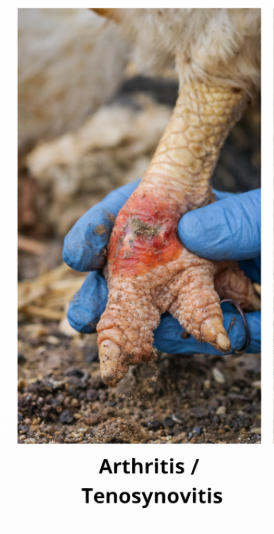
• What is it: Inflammation of the joints or tendons.
• Causes:
• Bacterial or viral infections
• Signs:
• Swelling in the joints
• Localized heat
• Limping
5. Rickets

• What it is: A metabolic disease that causes weak or bowed legs.
• Causes:
• Deficiency in vitamin D, calcium or phosphorus
• Signs:
• Soft bones
• Unsteady posture
• Prevention:
• Balanced diet + exposure to light
6. Injuries and Fractures

• Causes:
• High crowding
• Falls
• Inappropriate equipment
• Signs:
• Sudden limp
• Lack of stride
Key Risk Factors
• Wet or dirty bedding
• High density
• Unbalanced diet
• Genetics (especially in fast-growing breeds)
• Lack of exercise
Important prevention tips
• Maintaining dryness and cleanliness
• Providing quality and balanced food
• Ensure good ventilation
• Reducing crowding
• Daily inspections for early detection
*It is always advisable to consult a qualified veterinarian.


