
Biosafety in dealing with foot-and-mouth disease (FMD)
- Mar 23
- 2 min read
Foot-and-Mouth Disease is one of the most contagious and devastating diseases in the cattle, sheep and pig industries. A single outbreak can cause severe economic losses, farm closures and even export restrictions. Therefore, biosecurity is the first and most critical line of defense.
What is the disease and why is it so dangerous?
FMD is a highly contagious viral disease that affects cloven-hoofed animals:
• Cattle, sheep, goats, pigs
• Transmitted extremely quickly through:
• Direct contact between animals
• Equipment, clothing, vehicles
• Air (over long distances!)
Clinical signs:
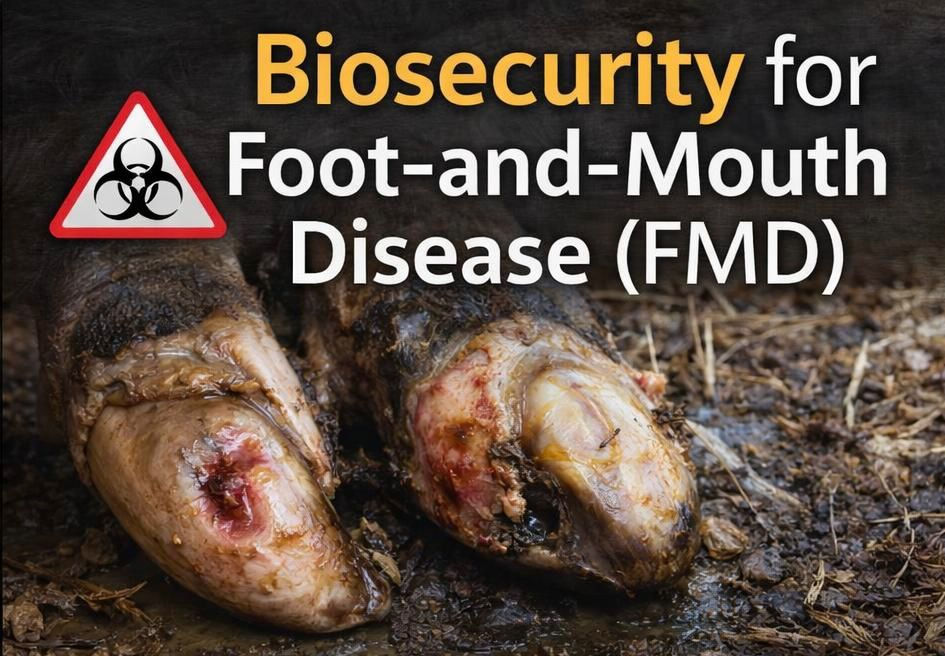
• Blisters in the mouth, tongue and paws
• Increased salivation
• Severe lameness
• A sharp decrease in milk production
• In calves – high mortality
How does the disease enter the dairy?
The main causes of entry:
• Introduction of animals without isolation
• Visitors (veterinarians, workers, suppliers)
• Contaminated transport vehicles
• Shared equipment between farms
• Contaminated feed/silage
• Wind (in extreme cases)
Principles of Biosecurity in the Farm
1. Strict Entry Control
• Limiting Visitor Entry
• Registering Everyone Who Enters
• Using Dedicated Clothing for the Farm
• Disinfecting Shoes and Hands

2. Quarantine New Animals
• Isolation of at Least 2–3 Weeks
• Monitoring Clinical Signs
• Veterinary Examinations Before Reuniting with the Herd
3. Disinfection of vehicles and equipment
• Washing and disinfecting trucks

• Designated equipment for each dairy farm

• Preventing the transfer of equipment between farms
4. Management of employee movement

• Permanent employees only
• Avoiding working in multiple dairy farms
• Ensure regular showers and changes of clothes

5. Proper handling of waste and carcasses
• Quick and safe evacuation
• Preventing access by other animals
• Disinfection of evacuation area
6. Food and water management
• Preventing silage contamination
• Closed and protected storage
• Avoiding the use of food from unknown sources
What to do if FMD is suspected?
Critical rapid action:
1. Immediately report to the local veterinarian
2. Stop animal movement from the barn
3. Close the barn to visitors
4. Isolate suspect animals
5. Intensive disinfection
Vaccinations – yes or no?
In many countries (including Israel in certain situations):
• Vaccination is given in areas at risk
• Does not replace biosecurity
• Important as part of a comprehensive plan
Economic consequences of an outbreak
• Destruction of entire herds
• Loss of milk production
• Closing of export markets
• Long-term damage to the economy
Important professional point
The FMD virus is very resistant to the environment and can survive:
• In mud, manure and silage
• On clothes and shoes
• In unsanitized equipment
Summary
Biosafety is not a recommendation – it is a daily management obligation.
Adhering to simple procedures can prevent economic and health disaster.
Therefore, even a small negligence can lead to an outbreak.
*It is always advisable to consult a qualified veterinarian.


